
# Stop writing generic gadget reviews. Here are 7 high-RPM, future-proof tech blog niches for 2026—from Agentic AI infrastructure to Green IT compliance—that actually pay.
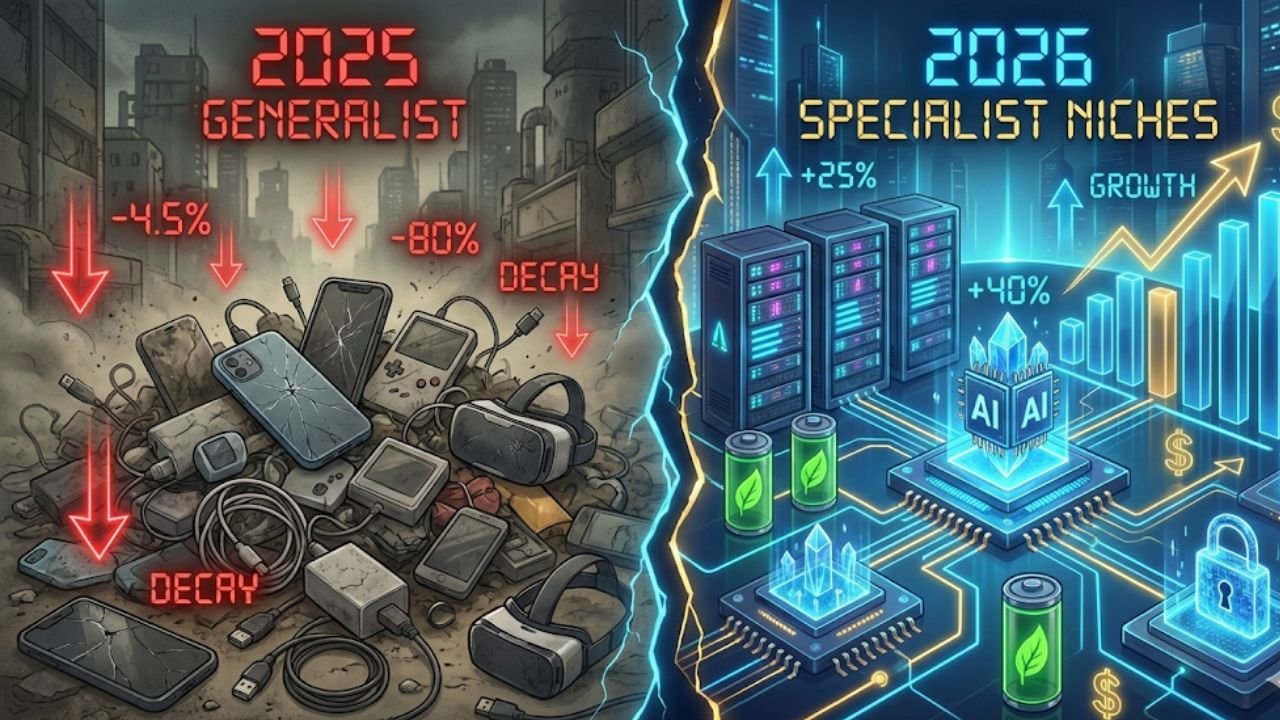
AnimaVersa – If you are still writing about the “Best iPhone Cases for 2026” or rewriting press releases about the latest Samsung Galaxy launch, I have some bad news for you: that race to the bottom is over, and the generalist tech blog lost. The era of high-volume, low-CPM (Cost Per Mille) display ad arbitrage is dead, killed by zero-click searches and AI answer engines that summarize your 2,000-word review into three bullet points.
The digital landscape has shifted tectonically. We aren’t just seeing a change in algorithms; we are seeing a fundamental change in how value is assigned to information. When a user can get a summary of “top 10 laptops” from ChatGPT or Perplexity in seconds, the value of a generic listicle drops to zero.
But here is the good news. While the “general tech” ship is sinking, a fleet of specialized, high-value speedboats is taking off. In 2026, profitability in tech blogging isn’t about pageviews; it is about RPM (Revenue Per Mille) and LTV (Lifetime Value). It is about solving expensive, complex problems for businesses and professionals who have budgets, not teenagers looking for free wallpapers.
My thesis for 2026 is simple: Money flows to Complexity and Compliance.
If a topic is hard to understand (Complexity) or legally required (Compliance), the CPMs are astronomical. Businesses don’t browse blogs for fun; they browse to solve painful infrastructure problems, navigate privacy laws, or cut massive cloud bills. If you can position yourself as the authority in these “boring” but critical trenches, you aren’t just a blogger—you’re a consultant with a scalable media arm.
Below, I’m breaking down the seven “Gold Rush” niches where I am seeing the highest potential for RPM and affiliate revenue in 2026. These aren’t guesses; they are based on where the venture capital and enterprise spending are actually going.
Read More : How to Start a Tech Blog in 2026: The Ultimate Beginner’s Guide
The “Gold Rush” Niches of 2026
1. Inference Infrastructure & Agentic AI
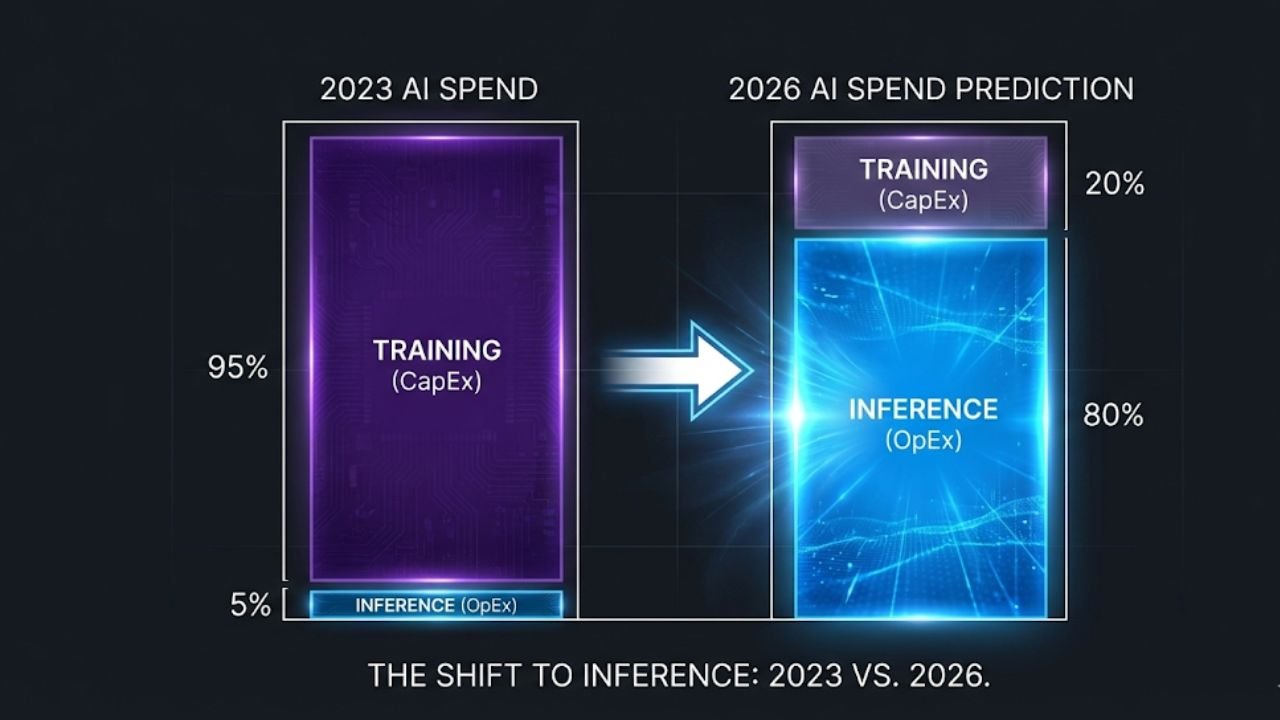
Everyone spent 2023 and 2024 obsessed with training AI models—the massive, billion-dollar clusters required to build GPT-4. But as we move into 2026, the market is undergoing a “Great Cost Inversion.” The training phase is a one-time capital expenditure (CapEx), but the real money pit for companies is now Inference—the ongoing operational expense (OpEx) of actually running these models every time a user asks a question or an agent performs a task.
Industry reports from firms like TrendForce indicate that by 2026, AI server shipments will boost significantly, driven not just by training, but by the need for low-latency inference at the edge. The narrative has shifted from “How do I build a model?” to “How do I run this model without going bankrupt?”
This shift is monumental. Analysts predict that by 2026, inference will account for roughly two-thirds of all AI compute. This acceleration is fueled by the proliferation of real-time applications like AI assistants and code copilots that demand constant, low-latency responses. The growth of a dedicated market for inference-optimized chips, projected to exceed $50 billion in 2026, highlights this industry-wide pivot.
The Inference Stack
Don’t blog about “What is ChatGPT.” Blog about the Inference Stack. This is where the technical complexity—and the money—lives.
Groq vs. Nvidia: The Hardware War There is a massive hardware war brewing. While Nvidia GPUs are the gold standard for training, companies like Groq (with their LPU architecture) are challenging the status quo for inference speed. Writing detailed cost-analysis comparisons—”Groq LPU vs. Nvidia H100 for Real-Time Voice Agents”—attracts high-level engineers and CTOs.
Groq’s LPU is built on a software-first, deterministic architecture that eliminates the unpredictability of GPU caches. This results in inference speeds that are significantly faster and more cost-efficient for specific workloads like LLMs. For example, Groq can process hundreds of tokens per second on Llama-70B, a feat that traditional GPUs struggle to match in terms of latency.
However, Nvidia isn’t standing still. With the Blackwell architecture and dedicated inference microservices (NIMs), they are fighting back. A blog that meticulously benchmarks these two against each other—analyzing tokens per second (TPS), time to first token (TTFT), and cost per million tokens—provides high-value intelligence that enterprise buyers are desperate for.
The “Agentic” Economy & Cloud Compute We are moving from chatbots to “Agents”—AI that does things. This requires specialized infrastructure. You can review and create tutorials for platforms like RunPod and Lambda Labs, which offer GPU cloud computing. Their affiliate programs are lucrative because you are referring customers who spend thousands a month on compute, not $10 on a phone case.
RunPod, for example, has a robust affiliate program where you can earn commissions on the serverless and pod spend of your referrals. Given that a single AI startup might burn through $5,000+ a month in GPU credits, a percentage-based commission here is a significant recurring revenue stream. Lambda Labs also partners with value-added resellers and referral partners to drive their high-performance compute business.
The Sovereignty Play The rise of open-weights models (like Llama 3 and DeepSeek) means companies want to run AI on their own private servers to save money and protect data sovereignty. Content focusing on “Self-Hosting Large Language Models for Enterprise” taps into a high-intent B2B audience.
The affiliate commissions for GPU cloud providers (RunPod, Lambda) and optimization tools are often recurring or high-ticket CPA. You are targeting developers and founders building the next unicorn, not casual surfers. The RPMs for keywords like “H100 pricing” or “Groq inference cost” are sky-high because the conversion value is massive.
2. Sustainable Tech & Green IT
I know, “Green Tech” sounds like a fluff topic from 2015. But in 2026, it is no longer about PR; it is about Compliance and Survival. New regulations, particularly in the EU (like the CSRD) and emerging SEC climate disclosure rules, are forcing companies to track their carbon footprint with forensic accuracy.
This isn’t about saving the polar bears; it’s about saving the balance sheet. CIOs are under immense pressure to reduce the carbon intensity of their digital supply chain (Scope 3 emissions). By 2026, sustainability disclosure will be a critical business imperative, with companies facing increasing scrutiny over their environmental impact.
The Compliance Stack
Carbon Accounting Software This is a booming SaaS vertical. Platforms like Watershed, Greenly, and Plan A charge thousands of dollars for enterprise subscriptions. These platforms are the “QuickBooks for Carbon,” helping companies measure, report, and reduce their emissions.
- Watershed is a leader in this space, offering audit-grade reporting and a marketplace for carbon removal.
- Greenly focuses on making carbon accounting accessible to SMBs and mid-market companies, with a strong partner program that includes referral commissions.
- Plan A provides certified software for ESG reporting and decarbonization, particularly strong in the European market.
Becoming an affiliate or educational partner for these platforms puts you in the B2B high-ticket lane. You aren’t selling a $20 book; you are generating leads for $50,000+ software contracts.
Green Coding & Cloud Optimization Engineers need to know how to optimize code to consume less energy (and thus cloud credits). Tutorials on “Reducing AWS Carbon Footprint via Serverless Architecture” appeal to cost-conscious tech leads. The intersection of “Green AI”—optimizing models to require less energy for training and inference—is a massive sub-niche.
Sustainable Hosting The affiliate payouts for green web hosting remain a staple. Companies like GreenGeeks offer high commissions (up to $100/sale) for referring users to their eco-friendly hosting platforms. While this is a lower ticket item compared to enterprise SaaS, the volume is higher, and the “Green” angle helps differentiate from generic hosting reviews.
Compliance is recession-proof. Companies must spend money on this. The RPMs for keywords related to “ESG reporting software” or “Scope 3 emissions tracking” are significantly higher than consumer tech keywords because the advertisers are enterprise SaaS companies with massive Life Time Values (LTV).
3. The “Human-First” Developer (Soft Skills)
Here is a controversial take: The “How to Code” tutorial niche is dying. AI Copilots write the boilerplate code faster than any junior dev. In 2026, the value of a software engineer isn’t syntax; it’s System Design, Architecture, and Management.
The industry is bifurcating. Junior coding roles are evaporating, but the demand for “AI Architects” and engineering managers who can wrangle AI agents is skyrocketing. The niche here isn’t “How to use React,” it’s “How to survive as a human developer in an AI world.”
Career Survival & Architecture
System Design & Architecture Focus on the high-level stuff AI struggles with. Review and promote high-end courses like System Design Interview prep. Platforms like Exponent and Interview Kickstart offer comprehensive training for these high-stakes interviews. These courses are expensive, often costing hundreds or thousands of dollars, meaning the affiliate commissions are substantial.
- Exponent offers courses taught by leaders from Google and Meta, focusing on system design and PM interviews.
- Interview Kickstart targets FAANG roles with comprehensive training programs.
Soft Skills for Engineers As AI takes over the coding, the human differentiator becomes communication, stakeholder management, and ethics. Platforms like Coursera and Udemy have seen a surge in demand for “soft skills” courses specifically tailored for technical professionals. Writing content about “Negotiation for Senior Engineers” or “Managing AI Teams” taps into this anxiety and ambition.
The “AI Manager” Role Content that teaches developers how to transition from writing code to reviewing AI-generated code and managing agentic workflows is the new frontier. The role of the developer is shifting to that of an “orchestrator,” and there is a massive educational gap here that you can fill.
You are selling career survival. The “fear of obsolescence” is a powerful motivator. Affiliates for career accelerators and high-end interview prep courses often pay 10-30% on products costing thousands of dollars. A single conversion can be worth $100-$500 to you.
4. Privacy-First Marketing & Data
The third-party cookie has finally crumbled. Browser restrictions (ITP, ETP) and privacy laws are making traditional digital marketing blind. Marketing teams are panicking. They need new infrastructure to track conversions without getting sued.
This niche is technically dense, which keeps the competition low and the CPMs high.
The Post-Cookie Infrastructure
Server-Side Tagging (SST) This is the new standard. Client-side tracking is dying due to ad blockers and browser restrictions. Moving tracking to the server-side restores data accuracy and compliance. Explain how to set up Google Tag Manager Server-Side and promote hosting partners.
- Stape.io is a leader here. They offer a server-side GTM hosting solution that is cheaper and easier than Google Cloud. Their partner program offers up to 40% recurring lifetime commissions. This is the holy grail of affiliate marketing: a sticky B2B infrastructure product with high retention.
Data Clean Rooms (DCR) With data privacy locking down, brands need a way to collaborate on data without sharing PII (Personally Identifiable Information). Data Clean Rooms like Snowflake and InfoSum allow this. Writing about “How to set up a Snowflake Data Clean Room for Retail Media” attracts enterprise architects and marketing directors.
Consent Management Platforms (CMP) Every website needs a cookie banner that actually works and complies with GDPR/CCPA. Reviews and tutorials for tools like Cookiebot, OneTrust, or Didomi attract traffic from business owners terrified of fines.
- Cookiebot offers a 30% commission on subscriptions.
- OneTrust has a robust partner ecosystem for consultants.
Data infrastructure tools have high retention. Once a company sets up their server-side tracking on Stape, they rarely leave. That means recurring affiliate commissions for you. Plus, the ad inventory on your site is valuable to B2B data companies desperate for leads in a cookie-less world.
5. Home Automation & “Physical AI”
The smart home niche used to be about asking Alexa to play music. In 2026, it is about Local Control and Physical AI. Privacy-conscious users are ripping out cloud-dependent devices and building local networks that don’t leak data to Big Tech.
The convergence of cheap edge hardware (like the Raspberry Pi 5 or Nvidia Jetson) and efficient local LLMs (Small Language Models) is creating a maker renaissance.
The Angle: The Local Intelligence Hub
Local LLMs on Edge Tutorials on “Running Llama-3-8B on a Raspberry Pi 5” or “Building a Local Voice Assistant with Nvidia Jetson Orin” bridge the gap between hardware enthusiasts and AI. The Raspberry Pi 5 has brought significant CPU upgrades, making it viable for smaller quantized models, while the Jetson Orin Nano is the beast for CUDA-accelerated inference. Comparing these two for specific “AI at the Edge” use cases is prime content.
Home Assistant The Home Assistant community is massive and hungry. Deep dives into advanced YAML configurations, ESPHome automations, and local voice control are huge. This audience loves tinkering and buys a lot of hardware.
Hardware Affiliates You aren’t just selling $10 smart plugs. You are linking to high-end mini-PCs, NPU accelerators (like the Coral TPU or Hailo chips), and prosumer networking gear. The Nvidia Jetson Orin Nano retails for around $249, and accessories add up.
Hardware reviews (especially niche maker gear) still convert well on Amazon and specialized electronics retailers. But the real money is in the “courses” and “digital products” you can sell to help people set this up.
Monetization Models That Work in 2026
If you are planning to slap Google AdSense on your blog and retire, think again. In 2026, high-traffic, low-value display ads are a trap. The “Answer Engine” shift means you might get less traffic, but the traffic you do get is higher intent. You must monetize that intent directly.
Display Ads -> “Answer Engine” Sponsorships & Newsletters
Traditional display ads are losing efficacy. Brands are moving budgets to Newsletters and Direct Sponsorships. Why? Because trust is the new currency. If you build a niche audience (e.g., “Enterprise Data Engineers”), a brand like Snowflake or Databricks will pay a premium to sponsor your weekly deep-dive email.
Furthermore, we are seeing the rise of AEO (Answer Engine Optimization). Your goal is to be the “cited source” for AI search engines like Perplexity or ChatGPT. Tools like SE Ranking now offer “Answer Engine Tracking” to monitor your brand’s visibility in these AI responses. Being the cited authority builds massive brand equity that you can leverage for direct deals.
Perplexity’s Publisher Program: Perplexity AI has launched a revenue-sharing program for publishers. They allocate a portion of ad revenue to publishers whose content is cited in their answers. This is a game-changer. It means that creating high-quality, fact-dense content that AI engines trust can directly generate revenue, even without a click-through.
High-Ticket Affiliate (B2B SaaS)
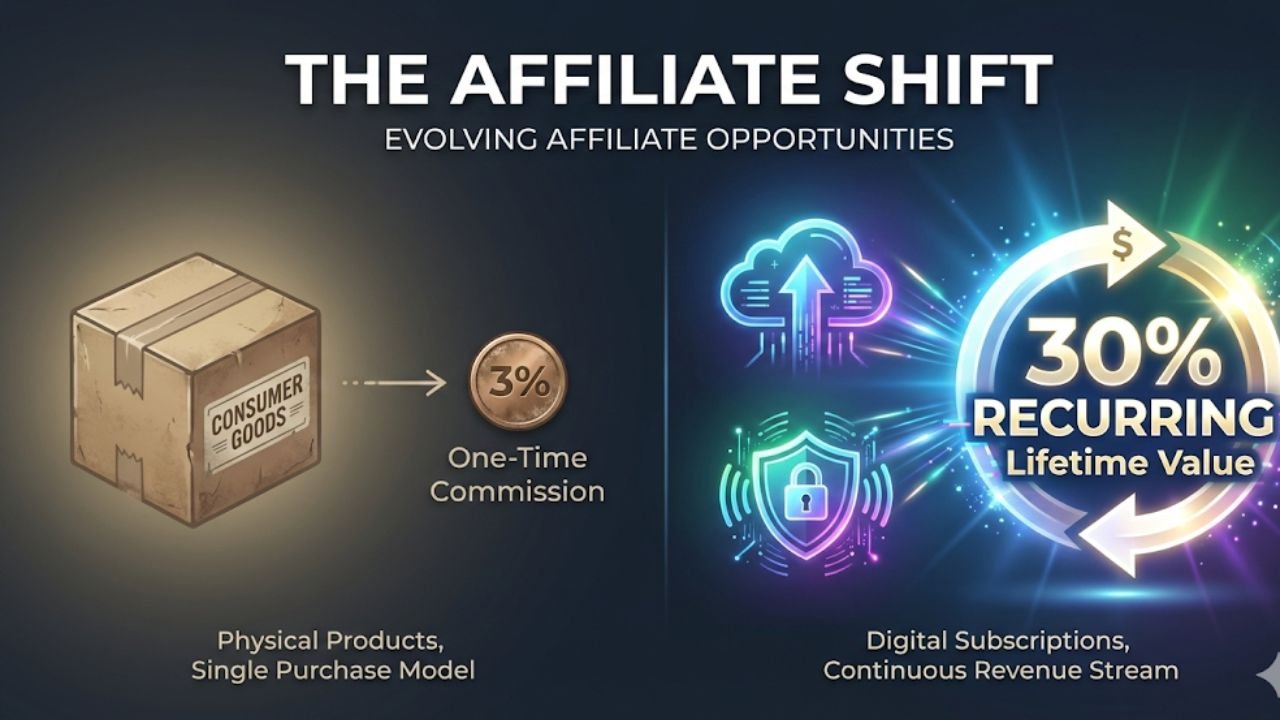
Forget Amazon Associates and their measly 3% commissions on consumer goods. The real money is in B2B SaaS Partner Programs.
Recurring Revenue: Tools like Ghost, Stape, Circle, or Semrush often offer 20-30% recurring lifetime commissions.
- Stape.io: Up to 40% recurring.
- Ghost: 30% recurring.
- Circle.so: 20% recurring.
- Semrush: $200 per sale + recurring options.
High CPA: Enterprise tools often pay $500 to $1,000 per qualified lead. In the “Sustainable Tech” niche, referring a corporate client to a carbon accounting platform like Greenly can net a massive payout via their partner program.
Attribution: SaaS companies use advanced attribution (first-click, longer cookies), which is fairer to content creators than the 24-hour Amazon window. For example, HubSpot offers a 180-day cookie window.
Digital Products & Micro-SaaS
Don’t just sell text; sell solutions.
- Notion Templates / Obsidian Vaults: If you are in the “Human-First Dev” niche, sell a “System Design Study Vault” for Obsidian.
- Custom GPTs / Agents: In the “Inference” niche, build and sell specialized prompt libraries or config files for local agents.
- Consulting: Use the blog as a lead magnet. If you write about “Data Clean Rooms,” the ultimate monetization is a $5,000 consulting retainer to help a company implement one.
H2: Future-Proofing Revenue
The biggest threat to tech blogging in 2026 is the AI search engine that answers the user’s question without them ever clicking your link. To survive, you need a Moat.
Community as a Moat
Content is a commodity; community is a fortress. If users only come to you for information, AI will replace you. If they come to you for connection, you are safe.
Paid Communities: Use platforms like Circle.so or Discord to build a paid membership. In the “Home Automation” niche, people will happily pay $10/month for access to a Discord where they can get troubleshooting help from you and other experts. Circle itself has an affiliate program, so you can monetize by teaching others how to build communities.
The “Town Square” Effect: Your blog should be the place where the discussion happens, not just where the facts are listed.
Tokenized Rewards & Web3
We are seeing a resurgence of “Ownership Economy” tools. Platforms like Paragraph.xyz or Mirror allow you to tokenize your content and build a subscriber base that you truly own.
On-Chain Referrals: Smart contracts can now handle affiliate tracking transparently. Paragraph has a referral reward system built-in where you earn crypto instantly when you refer a creator or a collector. This eliminates the “net-60” payment delays of traditional networks.
Reader Ownership: Letting your top readers “collect” your best articles as NFTs creates a “patronage” model that aligns incentives better than ads ever could. Mirror splits mint fees between the creator, the referrer, and the platform, creating a new economic model for publishing.
Conclusion: Action Plan
The era of the “Tech Generalist” is over. The algorithm hates you, and the AI summarizes you. But the era of the “Tech Specialist” has just begun.
To succeed in 2026, you need to pick a lane where the problems are expensive and the solutions are complex.
- Pick ONE Niche: Don’t try to cover Green IT and Home Automation. Pick one. Be the world’s expert on “Inference Infrastructure.”
- Optimize for RPM, Not Views: Focus on B2B audiences who control budgets. 1,000 visitors seeking “Enterprise Carbon Accounting” are worth more than 100,000 visitors seeking “Free iPhone Wallpapers.”
- Build a Moat: Start a newsletter (Ghost/Beehiiv) and a community (Circle/Discord) on Day 1.
Don’t just blog. Build an authority engine.
Key Takeaways
- Inference > Training: The money is moving to running AI models (OpEx). Focus on hardware (Groq) and cloud (RunPod) for inference.
- Compliance = Cash: Sustainable Tech and Privacy Marketing (Green IT, Server-side tagging) are fueled by legal mandates, ensuring steady demand.
- Soft Skills Premium: As AI writes code, human developers need System Design and Management skills. Sell the survival guide.
- Recurring Commissions: Shift from Amazon one-offs to B2B SaaS recurring revenue (30% LTV).
- Physical AI: The intersection of Local LLMs and Smart Home hardware is the new frontier for maker content.
- Publisher Revenue Share: Platforms like Perplexity are starting to pay publishers directly for citations—optimize your content for AEO.
Want more insights on the future of tech? Check out other articles by Raven S. to stay ahead of the curve. Don’t forget to follow and like AnimaVersa on Facebook, X, YouTube, Instagram, and TikTok for daily updates on the tech strategy landscape. Ready to build your authority? Start by setting up the right infrastructure. Read our Ghost vs. Substack Comparison to choose your monetization vehicle.

Raven S., is a technologist, professional coder, and software enthusiast with a singular vision: to bring transparency, depth, and genuine expertise to tech journalism.