
# Deciding between Copilot vs Gemini (2026)? We analyze the architectural battle: Microsoft’s Python-powered graph vs. Google’s 1-million token window. Find the right AI infrastructure for your business.
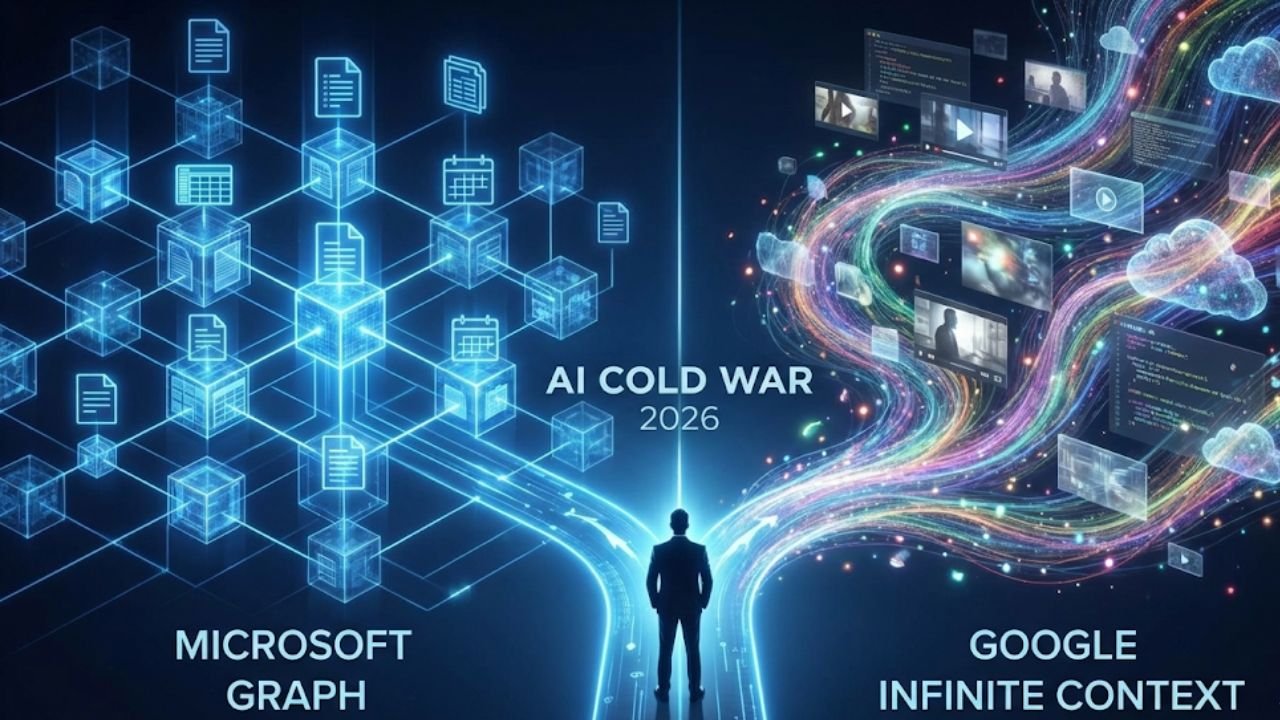
AnimaVersa – The year 2026 marks a pivotal moment in the history of digital work. The breathless hype cycle that characterized the early 2020s—where the mere ability of a chatbot to write a sonnet or summarize an email was considered miraculous—has long since evaporated. In its place stands a ruthless, pragmatic landscape defined by utility, integration, and return on investment.
We have moved past the era of “AI as a novelty” and firmly into the era of “AI as infrastructure.” For the modern enterprise, the question is no longer whether to adopt generative intelligence, but rather which philosophy of intelligence will govern the nervous system of the organization. This decision, seemingly binary, represents a profound fork in the road for corporate strategy.
On one side stands Microsoft Copilot, the deeply embedded, process-driven orchestrator that promises to turbocharge the structured world of the status quo. On the other stands Google Gemini, the fluid, multimodal research engine that seeks to reimagine the very nature of information processing through a memory so vast it borders on infinite.
This report serves as the definitive guide to the “AI Cold War” of 2026. We are not interested in surface-level feature comparisons or marketing fluff. Instead, we will dissect the architectural souls of these two giants. We will explore how Microsoft has turned Excel into a data science powerhouse with Python, and how Google has fundamentally altered the physics of “context” with its million-token windows. We will analyze the total cost of ownership, the friction of ecosystem lock-in, and the cultural implications of choosing one overlord over the other.
Whether you are a CIO mapping out a five-year digital transformation or a startup founder deciding on your productivity stack, this analysis offers the nuance and depth required to make the most consequential technology decision of the decade.
Read More : How to Build Your Own Personal AI Assistant Without Coding (2026)
Architectural Philosophies
To truly understand the user experience of 2026, one must first look beneath the sleek interfaces and understand the engines driving these systems. The fundamental divergence between Microsoft Copilot and Google Gemini lies in their approach to information retrieval and processing. This is not merely a technical detail; it is a philosophical difference that dictates every interaction a user has with the software.
Microsoft’s Graph-Centric Approach
Microsoft Copilot, even in its advanced 2026 iteration, remains fundamentally an “orchestrator.” It does not attempt to be a singular, all-knowing brain that holds your entire company’s history in its immediate consciousness. Instead, it acts as a hyper-efficient traffic controller. When a user asks Copilot a question—say, “Draft a proposal based on the Q3 financial review meeting”—the system does not simply hallucinate an answer. It triggers a complex chain of events known as Retrieval-Augmented Generation (RAG).
First, Copilot turns to the Microsoft Graph, a massive, interconnected map of a user’s digital life. It scans emails, chat logs in Teams, files in OneDrive, and meeting transcripts to find the specific “grounding” data relevant to the query. It is a retrieval engine first and a creative engine second. By leveraging the Graph, Microsoft ensures that Copilot is always anchored in the specific business reality of the user.
This architecture is designed for precision and security. It means that Copilot is exceptionally good at finding the “needle” because it has a sophisticated index of the “haystack.” It doesn’t need to read every document you have ever written every time you ask a question; it just needs to know where to look.
This approach aligns perfectly with the structured, hierarchical nature of traditional enterprise data. Corporations are built on files, folders, permissions, and distinct applications. Microsoft’s strategy is to weave AI into this existing tapestry without tearing it down. It uses multiple models behind the scenes—often orchestrating between GPT-4 class models for reasoning, specialized models for coding, and lightweight models for quick tasks—to deliver an answer that feels seamless.
Google’s Native Multimodality
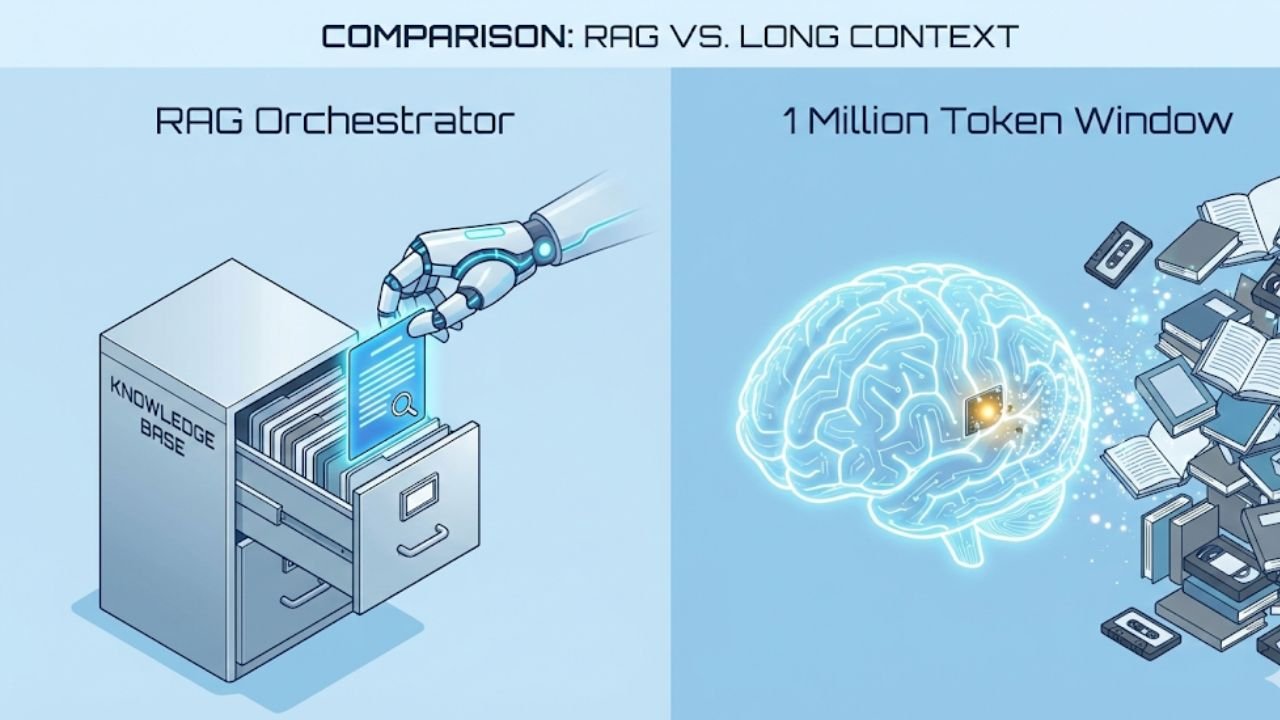
Google Gemini represents a radically different architectural bet. Rather than relying solely on retrieving bits and pieces of information from an index, Google has doubled down on the concept of the “Context Window.” By 2026, the Gemini 1.5 Pro and its successors have normalized the ability to process over one million tokens—and in some cases up to ten million—in a single pass. To put this in perspective, 1 million tokens is equivalent to about 700,000 words, or roughly eight average-length novels, or 50,000 lines of code.2
This massive context window fundamentally changes the “physics” of AI interaction. When you work with Gemini, you don’t necessarily need to rely on the AI finding the right file. You can simply “feed” the AI the entire project—hundreds of documents, hours of video, and repositories of code—and it holds all of that information in its active “short-term memory” simultaneously. It is the difference between a librarian who knows where every book is located (Copilot) and a genius who has instantly memorized every book in the library and can synthesize ideas across them in real-time (Gemini).
This “native multimodality” means that Gemini does not need to convert a video into text before understanding it. It “sees” the video frames and “hears” the audio directly. This allows for reasoning capabilities that are simply impossible in a retrieval-based system.
For instance, a user can ask Gemini to find a specific scene in a silent film based on a crude drawing, or to analyze the intonation of a speaker in a meeting to determine sentiment—tasks that require processing the raw data, not just a text summary. Google’s architecture suggests that the future of work is not about filing things correctly so they can be found, but about dumping massive amounts of unstructured data into a chaotic pile and letting the AI make sense of it.
Python in Excel vs. The Multimodal Canvas
Nowhere is the divergence in philosophy more palpable than in how these two giants handle data analysis. For decades, Microsoft Excel has been the undisputed king of the corporate world, the “green grid” that runs the global economy. Google Sheets has been the nimble, collaborative upstart. In 2026, the battle has shifted from “features” to “intelligence,” and Microsoft has played a trump card that appeals directly to the serious data analyst.
Copilot and Python
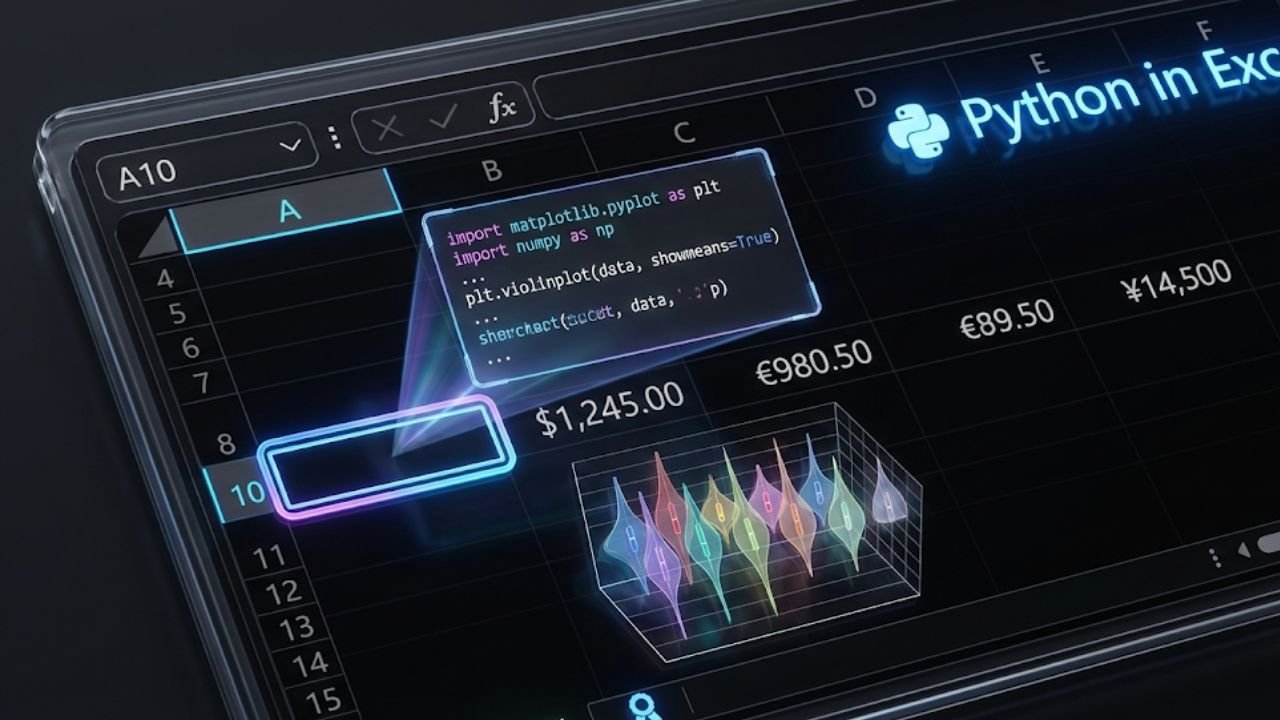
Microsoft’s integration of Python directly into Excel is perhaps the single most significant feature for the financial and operational sectors in the last decade. It bridges the gap between the accessible interface of a spreadsheet and the raw power of data science programming. In the past, if an analyst wanted to run a sophisticated forecast, they would have to export data from Excel, load it into a Python environment (like Jupyter Notebooks), run the code, and then paste the results back. This workflow was fraught with friction and version control errors.
With Copilot in Excel, the Python environment is embedded. A user can simply type a natural language prompt, such as “Forecast sales for the next 12 months using an ARIMA model,” and Copilot generates the Python code, executes it in a secure container on Microsoft Azure, and returns the results directly into the grid. This is not a “black box”; the user can see the code, debug it, and iterate.
The capabilities unlocked here are profound.
- Advanced Forecasting: Users can perform time-series analysis using models like ARIMA (AutoRegressive Integrated Moving Average) or SARIMA (Seasonal ARIMA). Copilot can automatically check for stationarity—a crucial statistical prerequisite—using the Augmented Dickey-Fuller test, and even apply “differencing” to the data to correct it, all without the user needing a PhD in statistics.
- Machine Learning: Beyond forecasting, users can run K-Means clustering to segment customers based on purchasing behavior or perform sentiment analysis on textual feedback rows.
- Visualization: The integration includes access to libraries like Matplotlib and Seaborn. This allows for the creation of complex, publication-quality visualizations—heatmaps, violin plots, and multi-variable regressions—that standard Excel charts simply cannot produce.
This feature set cements Excel’s position as the serious tool for serious business. It democratizes data science, allowing a financial controller to perform the kind of rigorous analysis that previously required a dedicated data science team.
Gemini’s Unstructured Mastery
While Microsoft wins on structured data and rigorous modeling, Google Gemini dominates the world of unstructured data. The massive context window of Gemini allows for a type of analysis that Excel cannot touch. Imagine a scenario where a business intelligence team needs to analyze the earnings calls of twenty competitors. These are audio files or long transcripts. In the Microsoft world, this is a multi-step process involving transcription, summarization, and manual collation.
In the Gemini world, the user simply uploads the twenty video or audio files. Because Gemini 1.5 Pro can ingest hours of audio and video natively, it can “listen” to all of them simultaneously. The user can then ask complex, synthesis-based questions: “Compare the tone of the CEO’s response to the supply chain question across all three companies,” or “Identify every instance where a competitor mentioned ‘AI integration’ and correlate it with their stock performance the next day.”
Gemini’s ability to recall “needles” in this massive “haystack” is unparalleled. In benchmarks, it has shown near-perfect recall even when the relevant information is buried in millions of tokens of unrelated data.3 This makes Gemini the ultimate tool for qualitative research, legal discovery, and competitive intelligence. It shines where the data is messy, voluminous, and multimodal. For a marketing strategist or a user researcher, Gemini’s ability to “grock” hundreds of user interviews and spot thematic patterns is far more valuable than an ARIMA model in Excel.
Word vs. Docs, PowerPoint vs. Slides
The battle for the “blank page” continues in 2026, but the AI assistants have changed the rules of engagement.
Writing and Creation
In Microsoft Word, Copilot acts as a professional editor and draftsman. Its strength lies in its awareness of the corporate corpus. It can “Draft a proposal based on this OneNote outline and the style of our last three whitepapers.” It understands the specific formatting nuances of the enterprise document. It excels at rewriting text to sound more professional, concise, or diplomatic. It is the tool of choice for the user who needs to produce a formal, structured document that adheres to strict brand guidelines.
Google Docs with Gemini feels more like a creative jam session. The “Help Me Write” features are fluid and often more imaginative. Because Gemini is less tethered to the rigid “file” structure, it feels faster to pull in ideas from across the web or from a chaotic brainstorming document. However, the real magic in Google’s suite often happens in the margins. The integration of Gemini into the side panel allowing for “Deep Think” or reasoning across multiple open tabs and Drive files makes it a superior research companion for students, writers, and journalists.
The Presentation Layer
PowerPoint has long been the gold standard for presentations, and Copilot attempts to automate the drudgery of slide creation. You can ask it to “Create a 10-slide deck based on this Word document,” and it will attempt to structure the narrative, pull in relevant bullet points, and apply a template. However, users in 2026 still find that the “creativity” of Copilot in PowerPoint can feel somewhat generic. It produces competent, corporate slides, but rarely inspiring ones.
Google Slides, while traditionally less feature-rich than PowerPoint, leverages Gemini’s image generation capabilities to great effect. The ability to generate custom visuals on the fly—”Create an image of a futuristic city with green energy for this slide”—is seamless. Furthermore, Gemini’s multimodal understanding allows it to analyze a slide deck and suggest speaker notes that actually match the visual content, or to summarize a deck into a text document for easier reading.
The New Boardroom
The “meeting” has undergone a radical transformation. AI has evolved from a passive transcriber to an active participant.
The Executive Secretary
Microsoft Teams with Copilot is the dream of every project manager. The AI does not just record the meeting; it structures the aftermath. It listens for “action items” with a relentless ear. If a manager says, “I’ll check with legal on that,” Copilot flags it, suggests a deadline, and can even create a task in Microsoft Planner linked to that specific moment in the transcript.
It excels at “meeting triage.” A user who joins a meeting 20 minutes late can ask Copilot, “What did I miss?” and get a succinct summary of the discussion so far, allowing them to jump in without disrupting the flow. The integration with Outlook is tight; Copilot can draft a follow-up email to all attendees summarizing the key decisions and next steps before the call has even ended.1
The Global Connector
Google Meet with Gemini takes a more human-centric approach. Its “Take notes for me” feature is robust, but its standout capability is bridging communication gaps. The real-time translation capabilities are superior, leveraging Google’s massive translation models to provide live captions in dozens of languages that are contextually accurate.
This makes it the preferred tool for global, distributed teams. Furthermore, Gemini’s video understanding allows for “post-game” analysis that is visually aware. You can ask Gemini to find the moment in the recording where the presenter showed the “Q3 sales chart” and it will find it based on the visual content of the screen share, not just the audio track.
GitHub Copilot vs. Gemini Code Assist
For the engineers building the future, the choice of AI assistant determines their velocity and code quality.
GitHub Copilot
Microsoft’s GitHub Copilot remains the dominant force in the developer world. Its integration into VS Code and the GitHub ecosystem creates a powerful flywheel. By 2026, it has evolved beyond line-completion. It is now a system architect. It understands the context of the entire repository, allowing it to suggest refactors that span multiple files. It serves as a mentor, explaining complex legacy code to junior developers and generating comprehensive unit tests with a single click.
Its dominance is reinforced by the “Workspace” feature, which allows developers to query their codebase like a database—”Where is the authentication logic handled and does it comply with the new OAuth standard?”.
Gemini Code Assist
Google’s contender, Gemini Code Assist (formerly under the Duet AI umbrella), leverages its massive context window to solve a different set of problems. While GitHub Copilot is excellent at the “flow” of writing new code, Gemini excels at understanding massive, undocumented monoliths. A developer can dump an entire legacy codebase—millions of lines—into Gemini’s context window and ask for a migration plan to a modern language.
Because it holds the entire code structure in memory, it can spot global dependencies and logic flows that a retrieval-based system might miss. Additionally, for developers working within the Google Cloud Platform (GCP) ecosystem, Gemini offers deep, native integration for infrastructure-as-code and cloud deployment, making it an indispensable tool for DevOps engineers on that stack.
The Price of Power
The decision between Copilot and Gemini is often finalized in the CFO’s office. In 2026, the pricing structures have matured, but the calculation of value remains complex.
The Cost of Microsoft Copilot
Microsoft typically charges a premium add-on fee—hovering around $30 per user per month—for the full Copilot experience in Microsoft 365, on top of the base license cost. For a large enterprise, this is a significant line item. However, the value proposition is “consolidation.” Microsoft argues that Copilot replaces the need for separate subscriptions to grammar checkers (Grammarly), code assistants (if bundled), and basic data visualization tools.
Furthermore, the “Commercial Data Protection” guarantee—ensuring that user data never trains the public model—is a requirement for regulated industries, justifying the premium. The ROI is found in the time saved on high-frequency, low-value tasks: the email summaries, the meeting notes, and the document formatting.
The Value of Google Gemini
Google has taken a more aggressive bundling approach. Advanced AI features are often included in the higher-tier Workspace editions or offered as a more affordable add-on for lower tiers. For startups and smaller businesses, the barrier to entry for Gemini is often lower. The ROI for Gemini often comes from “breakthrough” moments rather than incremental efficiency. The ability to use the 1-million token window to analyze a legal contract or a patent portfolio in seconds can save thousands of dollars in billable hours for a law firm. This “high-value, low-frequency” utility contrasts with Microsoft’s “medium-value, high-frequency” utility.
The Friction of Switching
Ultimately, the choice is often dictated by “ecosystem gravity.” If an organization has 10 years of data in SharePoint and Exchange, the friction of moving to Google Workspace to access Gemini is immense, regardless of Gemini’s superior context window. Conversely, a “cloud-native” startup that lives in Docs and Slack will find the heavy, file-based structure of Microsoft 365 suffocating. The “best” AI is often the one that lives where your data already lives.
The Bifurcation of the Digital Workplace
As we survey the landscape of 2026, it is clear that we are not moving toward a singularity where one tool wins everything. Instead, we are witnessing a bifurcation of the corporate world based on organizational culture and data philosophy.
The Microsoft Copilot Organization is one that values structure, process, and the optimization of the known. It is an organization where the spreadsheet is the source of truth and the meeting is the unit of work. For this company, Copilot is the ultimate efficiency engine, a tool that polishes the gears of the machine to make them run silent and fast.
The Google Gemini Organization is one that values fluidity, discovery, and the synthesis of the unknown. It is an organization where the document is a living canvas and the chat is the unit of creativity. For this company, Gemini is a telescope, a tool that allows them to see patterns in vast oceans of data that would otherwise remain invisible.
The choice, therefore, is not just about features. It is about identity. Do you want to build a better machine, or do you want to expand your mind? In 2026, you cannot do both with the same tool.
Executive Summary & Key Takeaways
| Feature Category | Microsoft Copilot | Google Gemini |
| Core Philosophy | Orchestrator: Retrieval-based (RAG), grounded in Graph. | Native Mind: massive context window (1M+ tokens). |
| Best For Data | Structured: Python in Excel, ARIMA modeling, complex financial forecasting. | Unstructured: Video/Audio analysis, massive document synthesis, qualitative research. |
| Best For Ops | Teams/Outlook: Action item tracking, email triage, corporate governance. | Meet/Docs: Real-time translation, creative collaboration, “Deep Think” research. |
| Developer Focus | GitHub Copilot: Flow, refactoring, and integration with VS Code. | Gemini Code Assist: Legacy migration, full-codebase understanding, cloud-native DevOps. |
| Pricing Model | Premium Add-on ($30/user/mo), high enterprise security focus. | Aggressive bundling, lower barrier to entry for SMBs/Startups. |
| The “Vibe” | Professional, Secure, Structured, “Corporate”. | Fluid, Creative, Expansive, “Native”. |
Ready to Lead Your Organization into the AI Era?
The future doesn’t belong to those who wait—it belongs to those who implement. Whether you choose the precision of Copilot or the expansiveness of Gemini, the time to act is now.
- Read the full Raven Report for our step-by-step implementation guides on deploying Python in Excel and configuring Gemini Enterprise security.
- Follow AnimaVersa for daily updates, expert analysis, and the latest trends from the AI frontier.

Raven S., is a technologist, professional coder, and software enthusiast with a singular vision: to bring transparency, depth, and genuine expertise to tech journalism.